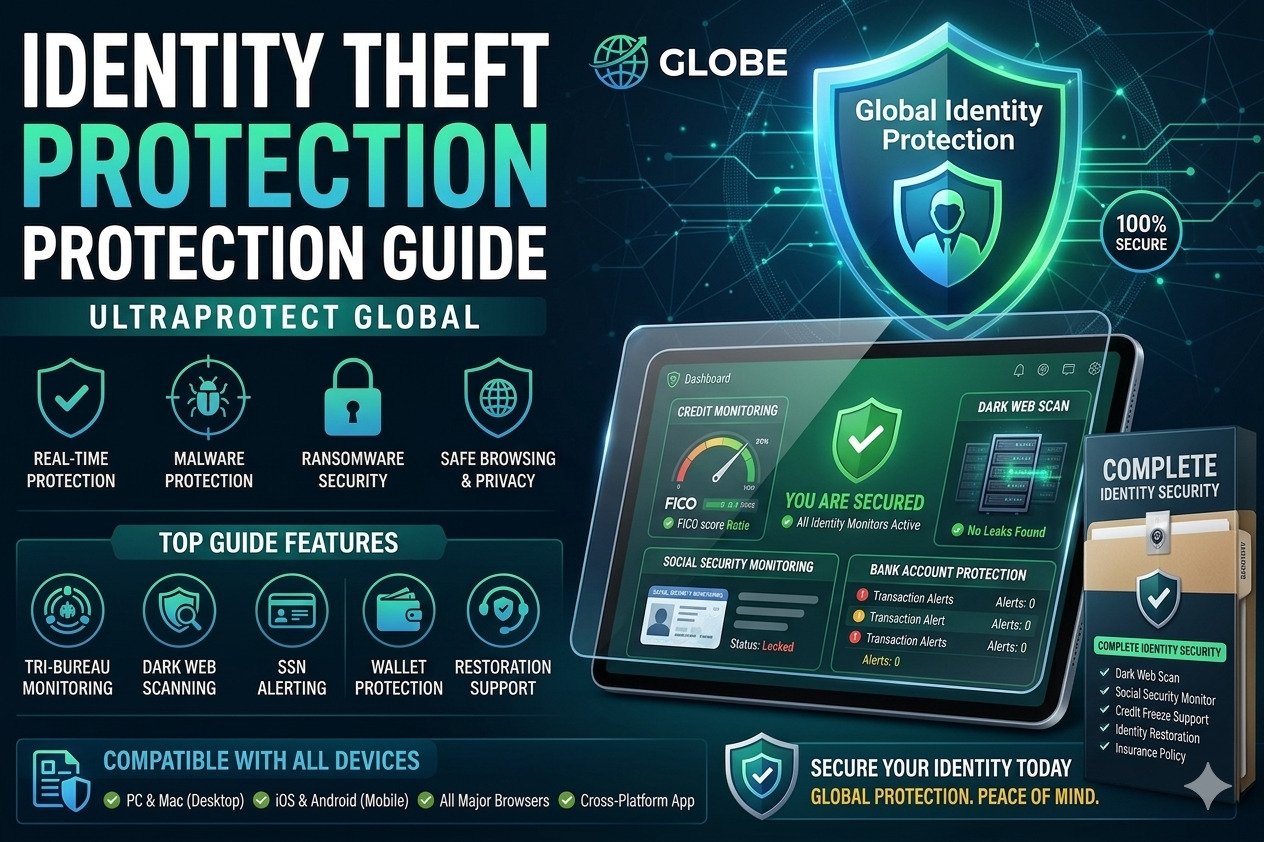
Identity Theft Protection Guide
Learn the best identity theft protection strategies, online identity security tips, cyber identity theft prevention methods, and dark web monitoring tools to protect your personal information online.
Cyber identity theft and online fraud are growing rapidly across the world. Hackers target personal information, banking details, passwords, social media accounts, and online identities through phishing attacks, malware, data breaches, and dark web leaks.
🔐 Security Tip:
Strong passwords, two-factor authentication, and online privacy protection tools significantly reduce identity theft risks and secure network vectors.
What is Identity Theft Protection?
Identity theft protection refers to security methods and online privacy protection strategies used to protect personal information from cybercriminals. Identity fraud prevention helps secure financial data, login credentials, social media accounts, and sensitive online records.
- ✓ Protect online banking information frameworks
- ✓ Prevent administrative account hacking attempts
- ✓ Reduce aggressive phishing attack vectors
- ✓ Secure end-to-end digital online privacy
- ✓ Monitor leaked personal information databases
Common Types of Cyber Identity Theft
| Identity Theft Type | Description / Threat Profile |
|---|---|
| Financial Identity Theft | Hackers steal critical banking records or credit card tokens to launch financial fraud schemes. |
| Email Account Theft | Cybercriminals access master Gmail or structural email accounts to compromise linked credentials. |
| Social Media Identity Theft | Fake account configurations or hacked profiles impersonate target users to scam networks. |
| Medical Identity Fraud | Personal health information records are hijacked to claim malicious insurance buffers. |
| Dark Web Data Leaks | Confidential identity parameters are sold systematically on underground marketplaces. |
How Hackers Steal Personal Information
Cybercriminals use multiple complex techniques to steal online identity parameters and sensitive database metrics from web users.
⚠️ Absolute Warning:
Never share master account passwords, real-time OTP codes, or critical banking details through suspicious emails, unverified SMS links, or unknown web domains.
Best Identity Fraud Prevention Tips
Cultivating clean cybersecurity hygiene safeguards your personal database clusters from exploitation routines:
What is Dark Web Monitoring?
Dark web monitoring tools work by scanning hidden online marketplaces, unindexed peer-to-peer communication nets, and leaked database dumps to catch compromised configurations. These algorithmic engines help users register external breaches quickly, allowing you to cycle authentication phrases before damage scales.
Benefits of Online Privacy Protection
- ✓ Secure containment of personal identification records
- ✓ Radical minimization of advanced identity fraud footprints
- ✓ Enhanced resilient structure for global app authentications
- ✓ Preventive blockade against direct financial extraction traps
- ✓ Long-term isolation and masking of your digital ecosystem signature
How to Protect Personal Information Online
Protecting personal information online requires strong cybersecurity habits and secure internet usage practices.
- Avoid Public WiFi for Banking: Never process confidential database logs over unsecured open-air routing arrays.
- Use Password Managers Securely: Leverage encrypted local vault keys to organize complicated character sequences.
- Enable Login Alerts: Configure pushed instant alerts to catch unrecognized access sequences immediately.
- Delete Suspicious Emails Immediately: Do not open or hover over unexpected attachments originating from unknown contacts.
- Keep Software Updated Regularly: Apply system security patches as soon as they drop to remediate known vulnerabilities.
Create Strong Passwords for Identity Protection
Generate strong passwords instantly and improve online identity security using secure password combinations.
Signs Your Identity May Be Stolen
Audit your logs continuously; look out for these structural system indicators:
Online identity security requires regular monitoring, secure login methods, password management, and awareness about phishing attacks and cyber scams.
Frequently Asked Questions
1. Can identity theft protection stop hackers completely?
No network architecture is entirely infallible, but robust protection shields neutralize entry-level scripts, dramatically reducing your vulnerability exposure.
2. Is dark web monitoring useful?
Yes. It functions as an early warning detection mechanism, identifying if your passwords or administrative credentials have been leaked before they are actively weaponized.
3. How often should passwords be changed?
Important administrative codes should be updated periodically, specifically whenever a platform data breach alert is announced or if suspicious localized behavior occurs.
Related Articles
Trusted Security Resources
- Cybersecurity and Infrastructure Security Agency (CISA)
- Federal Trade Commission Identity Theft Resources
- National Institute of Standards and Technology (NIST)